
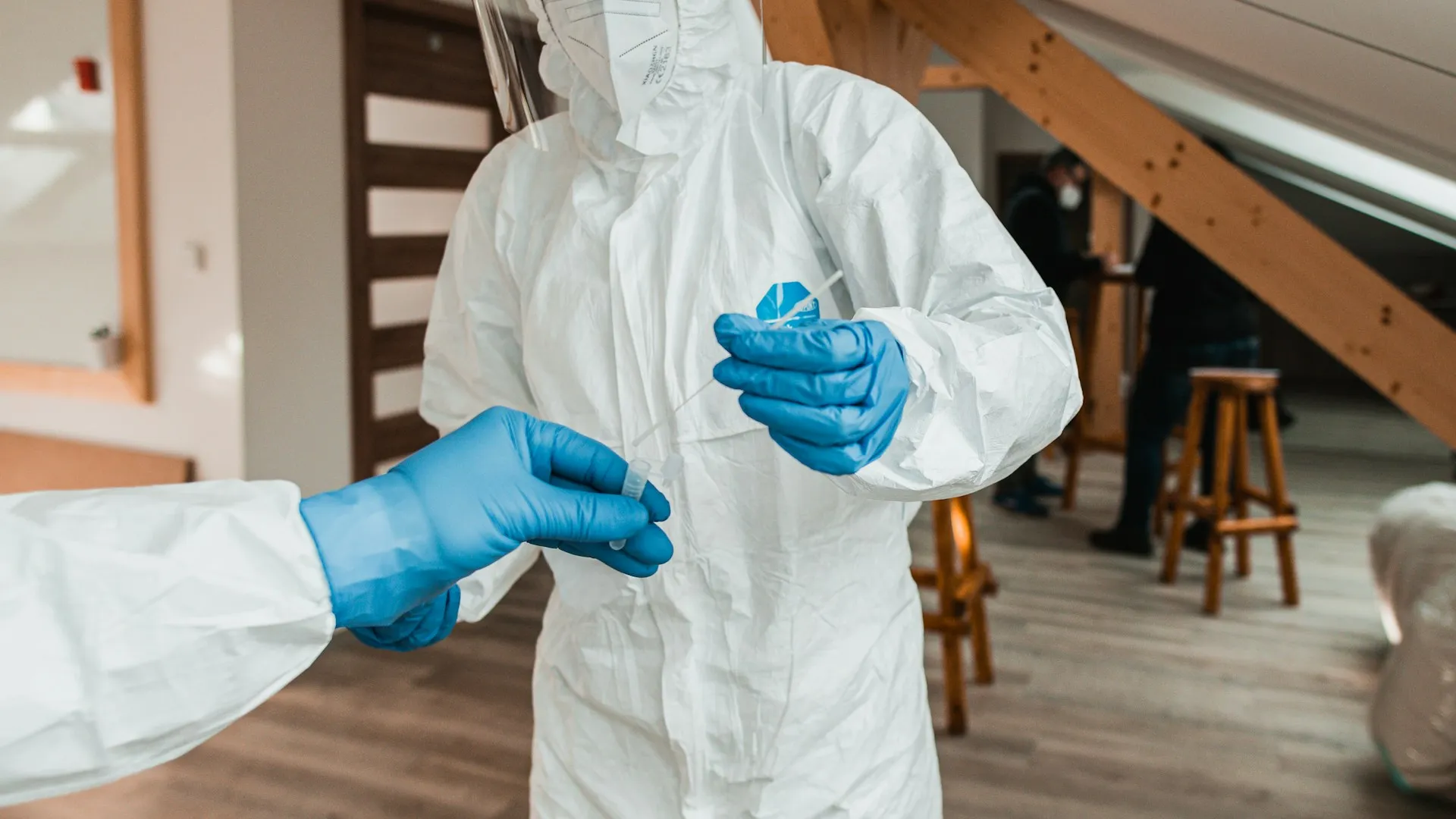
Mold is a moisture problem wearing a disguise. Master Construction provides IICRC certified mold inspection and remediation throughout Ventura County under the ANSI/IICRC S520 standard, and because we're a full service general contractor (Lic. #1027281), the same company that removes the mold finds the moisture that fed it, fixes that too, and rebuilds what came out. Family owned and operated since 1994. If water is actively flowing right now, skip this page and call the 24/7 emergency line at (805) 414-0840.
Why Ventura County Grows Mold
Between the marine layer, an aging housing stock, and slab construction that hides plumbing under concrete, this county gives mold plenty to work with. The colonies we remediate most often trace back to a handful of sources: bathrooms that never had adequate ventilation, slow supply-line leaks inside walls, roof leaks that wet attic sheathing every winter, crawl spaces that never fully dry near the coast, and water losses that got dried "mostly" instead of measurably.
Timing matters more than species. Mold can establish in wet building materials within 24 to 48 hours, which is why a water loss handled slowly so often becomes a mold job later. If your situation started as a leak or flood, our water damage restoration page covers that first phase, including the insurance machinery that usually comes with it.
Containment First, Then Removal
Remediation done wrong spreads the problem. Disturbing a colony without containment sends spores through the rest of the building on air currents, which is how a bathroom problem becomes a hallway problem. Our process follows S520 in the order that protects the rest of your home:
- Inspection and assessment. We find the full extent of the growth and, more importantly, the moisture source feeding it. Testing is available when you need lab confirmation of what you're dealing with.
- Containment. Affected areas get isolated behind sealed barriers under negative air pressure, with HEPA filtration scrubbing the contained air.
- Removal. Contaminated porous materials, typically drywall, insulation and trim, are removed and disposed of properly. Structural surfaces are cleaned and treated.
- Source repair. The leak, ventilation failure or drainage problem that caused the growth gets fixed, whether that means plumbing, roofing or exhaust fans that should have existed in the first place.
- Verification. Containment stays up until the area is clean and dry by measurement, not by eyeball, with documentation you can hand to a buyer, a tenant or an insurer.
A word about the bleach bottle: wiping visible mold off a surface removes the stain and leaves the colony. Mold roots into porous materials, and its spores are already in the air by the time you can see it. Surface cleaning has its place on hard, non-porous materials, but if growth keeps returning to the same spot, the problem is behind the surface, not on it.
The Rebuild Is Part of the Job
Most remediation companies stop at the studs, and you're left finding a second contractor to put the room back. We're a general contractor first: the drywall, insulation, texture, paint and flooring that came out during remediation go back in under the same contract, matched to what was there. One scope, one schedule, one number to call.
For property managers and HOA boards, mold is a recurring line item, not a one-time surprise: tenant reports, unit turnovers, common-wall containment questions, and owners who want documentation rather than reassurance. We run mold response the way boards need it run, with per-unit pricing that repeats, containment plans that respect neighboring units, written clearance documentation for the file, and standing certificates of insurance. Our HOA and property maintenance page covers the broader program.
On insurance: whether a mold loss is covered usually depends on what caused it. Mold from a sudden water loss is often covered as part of that claim, while long-term seepage frequently is not. We don't decide coverage, but we document cause, scope and moisture history in the detail carriers expect, which is exactly the evidence that question turns on. The full claims picture lives on our water damage restoration page.
- Mold inspection & testing
- Containment with negative air & HEPA filtration
- S520 removal & proper disposal
- Moisture source diagnosis & repair
- Clearance-ready documentation
- Full rebuild: drywall, paint, flooring
- HOA & property management programs
- 24/7 emergency line for active water
Proudly serving Ventura, Oxnard, Camarillo, Thousand Oaks, Newbury Park, Simi Valley, Moorpark, Agoura Hills, Westlake Village, Santa Paula, Fillmore, Ojai, Port Hueneme, Somis, and Calabasas, plus all of Ventura & Los Angeles Counties.