%20(17).png)
Demolition in Westlake Village
Demolition contractors for Westlake Village: interior strip-outs, structure removal and site clearing run cleanly in close-knit neighborhoods.
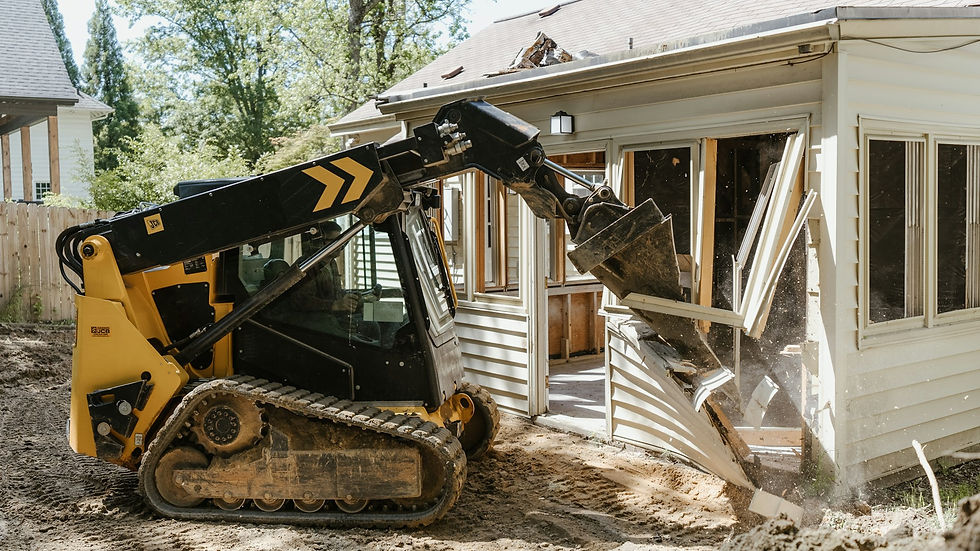
Demolition in Westlake Village happens in front of an audience: established streets, close neighbors, active associations and, on some parcels, the lake itself. The work has to be surgical and the site has to stay presentable, because the community judges a project by its messiest week. Master Construction (Lic. #1027281) runs demolition and excavation as the disciplined first phase of construction, not as wreckage with an invoice.
Strip-Outs That Set Up the Remodel
Most demolition here is interior: kitchens and baths stripped for remodels, walls opened for new floor plans, flooring and finishes removed ahead of better ones. Good strip-out is selective by definition. Plumbing that stays gets protected, wiring gets identified before anything is cut, structural members get respected until engineering says otherwise, and the surfaces adjoining the work zone survive untouched.
Buildings of this vintage require a materials conversation before the first swing. Construction from the era can include materials that need testing and, where results demand it, licensed abatement before disturbance. We test first as standard practice, because handling it correctly is a scheduling item while handling it wrongly is a health and legal problem. Owners get the results and the plan in writing.
Dust discipline is what owners remember. Containment barriers, negative air where the scope justifies it, floor protection on every path and daily cleanup keep an occupied house livable through its loudest phase. Demolition crews that leave a clean site every evening are announcing how the whole project will run.
Structures, Pools and Site Clearing
Whole-structure demolition serves the teardown-rebuild market this built-out city runs on: houses whose lots outvalue them coming down to make room for what the parcel deserves. That work is sequence and paperwork as much as machinery: utility disconnects confirmed and documented, hazardous material surveys completed, permits secured, and the machine work itself done with the neighbors' fences, trees and patience intact.
Accessory removals fill the middle of the practice: aging patio covers and pergolas, obsolete spas and their equipment, sheds, old concrete flatwork ahead of new hardscape, and swimming pool removals for owners reclaiming yard space. Pool demolition follows the applicable engineering and inspection requirements for either partial or full removal, and we explain both options plainly, since the choice affects future use of the ground.
Sloped and water-adjacent lots put erosion and runoff control into the scope: exposed soil managed, drainage patterns respected, and disturbed ground stabilized rather than abandoned to the first storm. Excavation for foundations, utilities and grading follows demolition as one continuous phase, with the same operator standard throughout.
Not everything coming out of these houses is debris. Intact cabinetry, doors, fixtures, appliances and hardware from well-kept homes have real second lives, and we coordinate salvage and donation ahead of demolition when owners want it. The house gives up its usable parts to organizations that can place them, the owner gets the documentation, and the landfill gets less. It takes a few extra days of planning and costs almost nothing against the satisfaction of it.
Permits, Haul-Off and Neighborhood Diplomacy
Demolition permits run through the City of Westlake Village building department, on the Los Angeles County side of our territory, with requirements scaled to the scope, and utility coordination and inspections ride alongside. We carry all of it. Associations add their own layer: notification rules, work-hour limits, street and parking logistics, and dumpster placement standards that we confirm before mobilization rather than negotiate mid-project.
Debris leaves responsibly. Concrete, metals and clean wood get sorted for recycling, loads get covered, and haul routes respect the community's streets. The measure of a demolition contractor is what the block looks like at five o'clock, and ours looks swept.
Property managers and boards use demolition more often than they expect: fire- or water-damaged unit strip-outs ahead of rebuild, obsolete common-area structures coming down, clubhouse interiors cleared for renovation. Association work gets insurance certificates up front, resident notification support, and scheduling that keeps amenities and access open. Because our restoration and construction crews follow the same contract, the site never sits gutted waiting for a second company.
Scheduling is honest about the noisy days: we identify them in advance, notify whoever needs notifying and stack the loudest work into the fewest possible days rather than letting it smear across weeks of a neighborhood's patience.
Demolition Services in Westlake Village
- Interior strip-outs for remodels
- Selective structural demolition
- Whole-house teardowns
- Pool & spa removal
- Patio cover & accessory structure removal
- Concrete & flatwork demolition
- Material testing & abatement coordination
- Erosion & runoff control
- Sorted recycling & covered haul-off
- Damaged-unit strip-outs for associations
Demolition in Westlake Village - FAQ
Do you test for hazardous materials before demolition?
On structures of this era, always. Samples go to a lab before disturbance, and where results require licensed abatement, it happens first, documented. The testing takes days; skipping it risks health, fines and a stopped project. There is no version where skipping wins.
Can you strip a kitchen without wrecking the rest of the house?
That is the craft. Containment walls seal the zone, floors get protected along every path, utilities are mapped and isolated before cutting, and adjoining rooms stay clean enough to live in. Selective demolition is measured by what remains untouched.
What does removing a pool involve?
Either partial removal, breaching and filling with engineered compaction, or full removal of the shell. The choice affects cost and what can be built on the spot later, and both paths carry engineering and inspection requirements. We explain the tradeoffs and permit whichever you choose.
How do you keep the neighbors from hating a teardown?
Communication and housekeeping: association notifications handled, work hours respected, streets kept clean, loads covered and the site secured and tidy every evening. Most neighbor friction is preventable logistics, and preventing it is part of our scope.
Is a permit required for demolition here?
Structure removal and most significant demolition, yes, through the city's own building department, with utility disconnect coordination alongside. Requirements differ from the Ventura County cities we also serve, and we manage the file so you never study the difference.
What happens to all the debris?
It gets sorted: concrete and metals to recycling, clean wood separated, remainder disposed of properly with documentation. Sorted loads are usually cheaper as well as cleaner, so responsibility and economy point the same direction, which makes the decision easy.
Can a management company hire you for damaged-unit strip-outs?
Yes, and speed is the value: fast mobilization after fire or water events, documented removal for the insurance file, containment that protects neighboring units and a rebuild crew under the same contract. The unit moves from damaged to under-reconstruction without a vendor gap.
Related Services
Demolition leads into home remodeling in Westlake Village, custom home building, and concrete work. County-wide: our demolition and excavation page.
Clear the Way Cleanly
Call (805) 667-8800 to scope a strip-out, teardown or site clearing.